The Reality of Rhino Poaching in South Africa
Rhinos are one of the world’s most threatened and iconic species. South Africa is home to nearly two-thirds of the global rhino population, yet these animals face immense threats from poaching. The primary driver is demand for rhino horn on the black market—particularly in parts of Asia where it is wrongly believed to have medicinal properties.
Despite increased conservation efforts across many reserves and parks, poaching rates remain high due to the significant financial rewards. Rhino horns fetch extremely high prices, and poachers act quickly and violently, often killing rhinos for their horns alone.
At Balule Nature Reserve, rhino protection is an ongoing priority. One of the most widely used and effective interventions is rhino dehorning.
Why Dehorning is Necessary
Dehorning is not a perfect or permanent solution, but it plays an important role in a broader anti-poaching strategy. By removing a rhino’s horn, the financial incentive for poachers is reduced.
Hornless rhinos are less valuable on the black market, making them less attractive targets. In many cases, poachers will move on to areas where horned animals remain. While not foolproof, this approach gives conservation teams valuable time to strengthen other protective measures and reduce the overall threat.
At Balule, as in many reserves across South Africa, dehorning is used as part of a multi-layered approach to prevent rhino extinction. The decision to dehorn is never taken lightly; animal welfare, conservation outcomes, and the latest poaching data are always considered before any action is taken.
The Dehorning Process
Dehorning is carefully planned to be safe, efficient, and humane, involving experienced veterinarians and coordinated field teams.
Selection and Planning
Not all rhinos are dehorned at the same time. Conservation managers determine which animals need dehorning based on:
- – Age and horn size: Rhinos with larger horns pose a greater poaching risk and are prioritized. Younger rhinos with small horns may be left alone.
- – Location: Animals in areas with higher poaching threats are prioritized.
- – Health: Only healthy rhinos that can safely be sedated are selected.
Locating the Rhino
A spotter plane or helicopter is used to locate rhinos from the air. This allows ground teams to move quickly and limits disturbance to other wildlife.
Sedation
Once a rhino is found, a veterinarian uses a dart gun to sedate the animal. The sedative works within minutes, safely immobilizing the rhino.
Ground Team Intervention
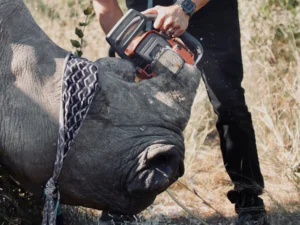
As soon as the rhino is sedated, the ground team moves in. The rhino’s eyes are covered with a blindfold to keep it calm, and its ears are plugged to reduce noise. Vitals such as heart rate, temperature, and breathing are closely monitored throughout the procedure.
Horn Removal
Using chainsaws, veterinarians carefully remove the horn just above the growth plate. This method ensures that the rhino feels no pain and that the horn can regrow over time.
The horn removal typically takes less than 20 minutes. Once completed, the vet administers a reversal drug, and the rhino usually wakes up within minutes.
Post-Dehorning Monitoring
After the procedure, the rhino is monitored closely to check for any signs of complications. When done correctly, dehorning has proven to be safe and effective.
What Happens to the Removed Horns?
All removed horns are managed under strict regulations. They are never sold or traded. Instead, they are securely stored under government supervision. Each horn is documented, genetically recorded, and placed under surveillance to prevent theft or illegal use. This ensures they do not contribute to the illegal wildlife trade.
Life After Dehorning
At Balule, we believe that conservation cannot succeed without community empowerment.
It is a common misconception that rhinos cannot survive without their horns. In reality, dehorned rhinos adapt well.
Rhinos use their horns for defense, social interaction, and occasional digging, but they also rely heavily on their strength, size, and behavior to navigate their environment.
At Balule, dehorned rhinos have been observed behaving normally—grazing, defending their calves, breeding, and interacting with other rhinos. Horn regrowth occurs naturally, so the process must be repeated approximately every 18 months to remain effective.

African Parks Rhino Release
In 2024, Balule received a group of white rhinos from African Parks as part of a national rewilding initiative. These rhinos, raised in controlled environments, are now adapting to life in the wild.
They have been dehorned to reduce poaching risk and are closely monitored as they establish territories, interact with other wildlife, and adapt to their new environment. Their progress offers valuable insights into rewilding strategies and long-term population recovery.
How Balule Protects Its Rhinos
Dehorning is just one part of Balule’s broader conservation approach. Other key measures include:
- – Anti-poaching patrols: Trained rangers conduct daily foot and vehicle patrols to detect and deter illegal activity.
- – K9 units: Specialised dogs assist in tracking poachers and locating illicit materials.
- – Community engagement: Building positive relationships with local communities helps reduce poaching pressure and encourages conservation support.
- – Education: Raising awareness around poaching and the value of rhinos supports long-term change.
Together, these efforts form a strong, coordinated defense that improves the chances of rhino survival in Balule.
The People Behind the Effort
Effective rhino conservation relies on the commitment of many people:
- – Veterinarians who oversee dehorning and provide medical care
- – Rangers and anti-poaching teams who patrol and protect the reserve
- – Pilots who assist with aerial tracking and surveillance
- – Animal monitors who track rhino movements and collect data
- – Donors and supporters whose funding makes it all possible
Each of these individuals plays a vital role in protecting rhinos from extinction.
How You Can Help
You don’t need to be on the frontlines to make a difference. Here’s how you can support rhino conservation at Balule:
- – Donate to the Balule Community & Anti-Poaching (BCAP) Trust: Your support helps fund critical operations like dehorning and patrols.
- – Spread awareness: Educate others about the realities of rhino poaching and the role dehorning plays in protecting these animals.
- – Support ethical tourism: Choose to visit reserves and lodges that prioritise responsible, science-based conservation.
Every contribution—big or small—helps us protect rhinos for future generations.
Dehorning is a hard but necessary tool in the ongoing fight to protect rhinos. It is not a standalone solution, but it significantly reduces poaching risk and buys time for broader conservation efforts.
At Balule, dehorning is just one piece of a comprehensive, coordinated strategy to ensure that rhinos can continue to roam freely and safely. With continued support and collaboration, we can give this endangered species a real chance at survival.
Support rhino conservation at Balule: Donate to the BCAP Trust