Balule Nature Reserve is a privately managed conservation area located on the Limpopo
border of South Africa. It forms part of the Greater Kruger National Park through its
membership in the Associated Private Nature Reserves (APNR)—a network of privately
owned reserves that collaborate with South African National Parks (SANParks) to conserve
wildlife and ecosystems on a large, connected scale.
Spanning over 42,000 hectares, Balule is dedicated to long-term conservation, community
upliftment, and the protection of South Africa’s natural heritage. As part of an open system,
wildlife can roam freely between Balule and Kruger, supporting natural species migration,
ecological integrity, and habitat diversity.
But Balule is not just a nature reserve. Its strength lies in its structure: rather than operating
as a single entity, it is a collection of independently managed reserves brought together by a
shared vision—to protect wildlife and uplift the communities that live alongside it.
Nature doesn’t survive by accident. It survives because people choose to
protect it.
One Reserve, Many Regions
Balule is made up of several distinct regions, each with its own management teams and
landowners. Some areas host eco-lodges and tourism operations, while others are privately
owned or focused solely on conservation. Despite their independence, all regions follow the
conservation and operational guidelines set by the Balule Nature Reserve Association
(BNRA).
Balule’s regions include:
- – Olifants River Game Reserve (ORGR)
- – Olifants North Game Reserve (ONGR)
- – Mohlabetsi South Nature Reserve (MSNR) – made up of Jejani, Nala, and Mossco
- – Boston & Pridelands
- – Mohlabetsi River Nature Reserve (MRNR)
- – York
- – Parsons
- – Maseke
- – GDP – made up of Grietjie, Doreen, and Paul
Each region contributes to a broader conservation plan, aligning with the values, ecological
goals, and compliance requirements of BNRA. This decentralised but coordinated model
fosters local ownership, while ensuring that wildlife protection, land management, and
environmental monitoring are consistent across the reserve.
The concept of open boundaries between reserves is critical. It allows animals to move
freely and naturally, which supports biodiversity, reduces stress on species, and maintains
ecological balance.
Balule’s Role in the Greater Kruger System
Balule plays a vital role in South Africa’s larger conservation strategy. By being part of the
Greater Kruger National Park, it helps expand the protected territory available to endangered
species such as rhinos, wild dogs, pangolins, and ground hornbills.
Membership in the APNR gives Balule access to strategic partnerships with SANParks,
enforcement agencies, and research institutions. These collaborations improve data sharing,
anti-poaching coordination, and long-term ecological planning.
In a region facing growing pressures from poaching, land degradation, and climate change,
Balule’s contribution to this open, connected landscape is essential – not only for wildlife but
for South Africa’s broader environmental resilience.
Tourism, Research and Responsible Access
The Balule Community and Anti-Poaching Trust (BCAP) is the backbone of Balule’s
conservation efforts. Created to combat threats like poaching and habitat destruction, the
BCAP Trust funds and manages key field operations that keep wildlife safe.
Initiatives supported by BCAP include:
- – Wildlife security patrols and aerial surveillance
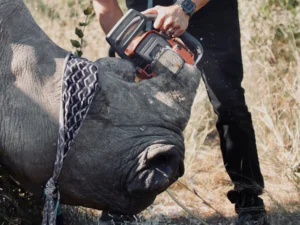
- – Rhino dehorning operations
- – Animal relocations and welfare
- – Snare removal and trap monitoring
- – K9 unit training and vet care
- – APU (Anti-Poaching Unit) equipment and ranger training
Thanks to donor support, BCAP is able to keep boots on the ground, vehicles in the field,
and aircraft in the sky. Without this hands-on, coordinated response, many species in Balule
would face much higher risks.
People and Purpose: The Balule Outreach Trust (BOT)
At Balule, we believe that conservation cannot succeed without community empowerment.
The Balule Outreach Trust (BOT) was founded in 2012 by the late John Anderson, along
with members, residents, and friends of the reserve. Its mission is to support the people who
live and work in and around Balule. Because when communities thrive, conservation thrives
too.
BOT focuses on:
- – Education and school partnerships
- – Sustainable development programs
- – Health, nutrition, and social support
- – Youth engagement in conservation
- – Skills training and employment opportunities
Through BOT, Balule builds long-term relationships with families, schools, and communities.
These efforts are entirely donor-funded and aim to create a future where people and nature
can live and grow together.
Get Involved
Balule relies on people who care, just like you. Whether you’re passionate about wildlife,
committed to making a difference, or simply want your travel to have meaning, there are
ways to get involved.
Here’s how you can help:
- – Donate to the BCAP or BOT Trusts
- – Plan a visit to one of our eco-lodges or guided experiences
- – Follow and share our story on social media
- – Partner with us on conservation or community projects
Every action—no matter how small—helps to protect the future of this reserve.
Why It Matters
Balule’s model shows that conservation can be inclusive, collaborative, and effective. It
contributes directly to global priorities:
- – Protecting endangered species
- – Preserving biodiversity
- – Empowering rural communities
- – Ensuring long-term ecological health
As climate pressures and development expand across South Africa, models like Balule’s,
where tourism, conservation, and community support coexist—will become increasingly
essential.
This is more than a reserve. It’s a real-world example of how conservation works when
people come together. It’s a story of protection, progress, and partnership.
Thank You for Being Part of the Journey
Your support helps to protect wildlife, empower communities, and preserve one of Africa’s
most important conservation areas.
Whether you visit, support, or collaborate with us—you are part of the solution.
Learn more, donate, or plan your visit at www.balulenaturereserve.com
Because protecting nature takes all of us. And together, we’re writing the next chapter of
conservation in South Africa.